Healthcare Spending Projections: $5 Trillion by 2026 – Impact
Anúncios
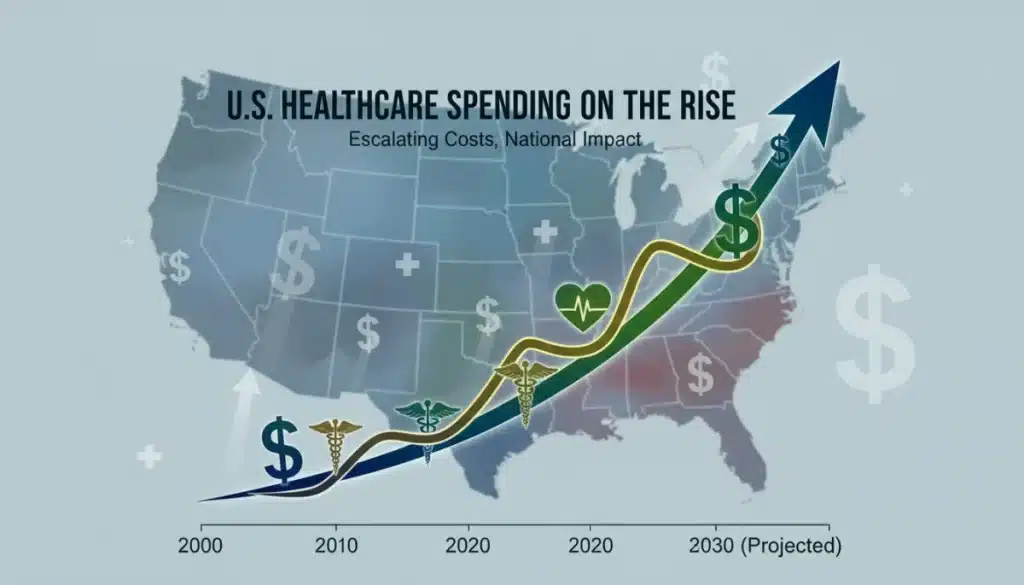
National healthcare spending in the U.S. is projected to reach $5 trillion by 2026, indicating significant financial shifts for individuals, businesses, and governmental healthcare programs.
Anúncios
The landscape of American healthcare is undergoing a profound transformation, with recent forecasts indicating that national healthcare spending projections are set to reach an astounding $5 trillion by 2026. This monumental figure isn’t just a number; it represents a complex web of economic, social, and personal challenges and opportunities that will touch every American. What does this dramatic increase truly signify for your wallet, your access to care, and the future of healthcare in the United States?
Understanding the $5 Trillion Projection: The Driving Forces
Anúncios
The projection of national healthcare spending reaching $5 trillion by 2026 is a stark indicator of the multifaceted pressures within the U.S. healthcare system. This isn’t a sudden spike but rather a continuation of long-standing trends, exacerbated by new dynamics. To truly grasp the implications, we must first dissect the primary drivers behind this substantial increase.
Several key factors contribute to this upward trajectory, each playing a significant role in escalating costs. These drivers are interconnected, creating a complex system where changes in one area often ripple through others, amplifying the overall financial burden. Understanding these elements is crucial for anyone seeking to comprehend the future of healthcare economics.
Demographic Shifts and Chronic Conditions
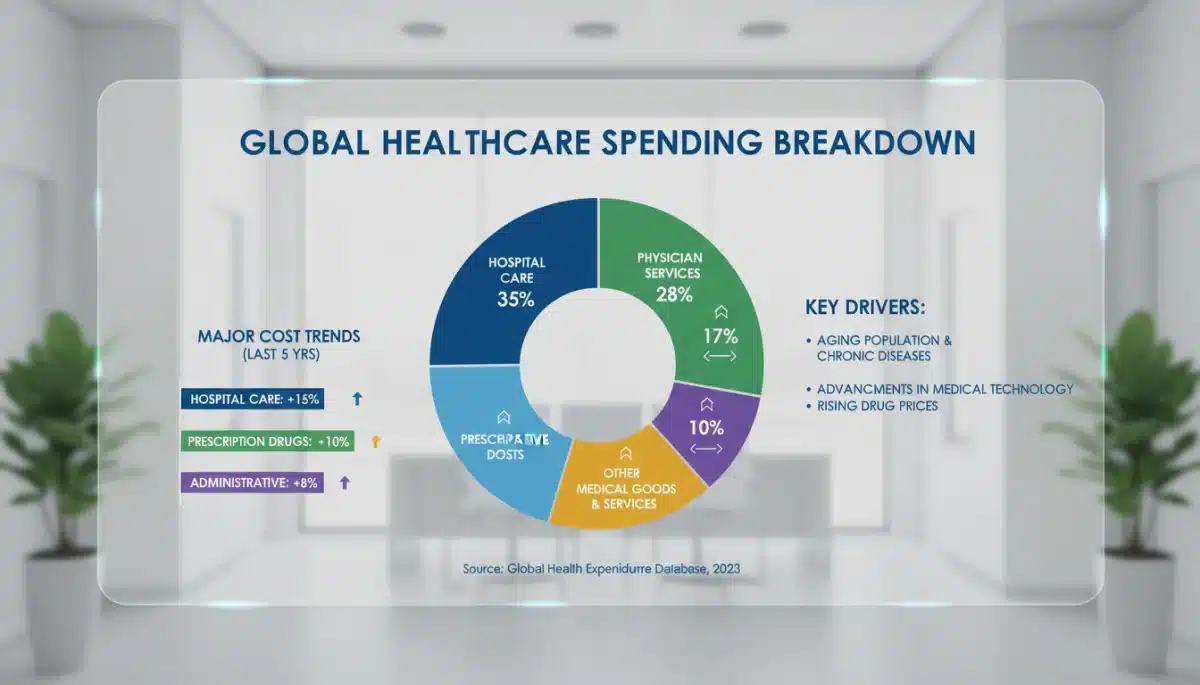
One of the most significant contributors to rising healthcare costs is the aging population. As the baby boomer generation enters retirement, the demand for medical services naturally increases. Older adults typically require more frequent medical attention, specialized care, and prescription medications. This demographic shift places immense pressure on Medicare and other healthcare providers.
- Aging Population: Increased demand for geriatric care, long-term care facilities, and age-related chronic disease management.
- Chronic Disease Prevalence: Conditions like diabetes, heart disease, and obesity require ongoing, costly treatments and management.
- Longer Lifespans: While a positive development, extended lifespans often mean more years living with chronic conditions, leading to higher lifetime healthcare expenditures.
The prevalence of chronic diseases is another critical factor. A large percentage of healthcare spending is attributed to managing chronic conditions that require continuous care, frequent doctor visits, and expensive pharmaceuticals. Lifestyle factors, environmental influences, and genetic predispositions all play a role in the rising rates of these conditions, making their management a perpetual challenge for the healthcare system.
Technological Advancements and Pharmaceutical Costs
While medical innovations bring life-saving treatments and improved diagnostics, they often come with a hefty price tag. New drugs, advanced surgical techniques, and sophisticated imaging technologies are incredibly effective but contribute significantly to the overall cost of care. The research and development required for these breakthroughs are substantial, and those costs are ultimately passed on to consumers and insurers.
Pharmaceutical spending, in particular, has been a major driver of growth. The development of specialty drugs for rare diseases, as well as new treatments for common conditions, can be extraordinarily expensive. The pricing models for these medications are complex and often controversial, leading to significant out-of-pocket costs for patients and increased premiums for everyone.
In conclusion, the $5 trillion projection is not just an arbitrary number; it’s a reflection of deep-seated trends in demographics, disease patterns, and technological progress. Addressing these drivers requires a comprehensive approach that considers both the demand and supply sides of healthcare economics.
Impact on Individuals: What You Can Expect
The projected surge in national healthcare spending to $5 trillion by 2026 will undoubtedly have a direct and tangible impact on individuals across the United States. This isn’t merely an abstract economic forecast; it translates into real-world consequences for personal finances, access to care, and overall health security. Understanding these potential impacts is crucial for individuals to prepare and adapt.
For many, the most immediate effect will be felt in their wallets. Rising healthcare costs typically translate into higher premiums, increased deductibles, and greater out-of-pocket expenses. This financial burden can be particularly challenging for those with chronic conditions or unexpected medical emergencies, potentially leading to difficult choices between essential care and other necessities.
Rising Insurance Premiums and Out-of-Pocket Costs
Health insurance premiums have been steadily climbing for years, and this trend is expected to continue. As the overall cost of providing healthcare services increases, insurers pass these costs onto policyholders. This means that individuals and families will likely see a larger portion of their income dedicated to health insurance, regardless of whether they receive employer-sponsored plans or purchase coverage through marketplaces.
- Higher Monthly Premiums: A larger chunk of your paycheck or household budget will go towards maintaining health coverage.
- Increased Deductibles: You may need to pay more out-of-pocket before your insurance coverage fully kicks in.
- Greater Co-pays and Co-insurance: The cost-sharing for doctor visits, prescriptions, and procedures could rise, impacting routine care affordability.
Beyond premiums, out-of-pocket expenses are a growing concern. High-deductible health plans, while often having lower premiums, require individuals to pay a significant amount before their insurance begins to cover costs. This can create financial barriers to seeking timely medical attention, leading to delayed diagnoses or treatments that ultimately become more expensive.
Access to Care and Quality Concerns
The financial pressures stemming from increased spending can also influence access to care. As healthcare systems grapple with rising costs, there may be shifts in how services are delivered. This could manifest in longer wait times for appointments, reduced availability of certain specialists, or increased reliance on telehealth services, which may not suit everyone’s needs.
While the U.S. boasts advanced medical technology, the quality of care can be unevenly distributed. Financial constraints might lead to providers making difficult decisions about resource allocation, potentially affecting patient-to-staff ratios or investment in new equipment. For individuals, this means it becomes even more important to be proactive in managing their health, understanding their insurance plans, and advocating for their care.
In essence, individuals face a future where healthcare is more expensive and requires greater personal financial responsibility and engagement. Preparing for these changes by budgeting for healthcare costs and understanding insurance options will be paramount.
Implications for Businesses and Employers
The escalating national healthcare spending projections to $5 trillion by 2026 present significant challenges and strategic considerations for businesses and employers across the United States. As major providers of health insurance for millions of Americans, companies bear a substantial portion of these rising costs, impacting their bottom lines, competitive positioning, and employee welfare. Understanding these implications is crucial for sustainable business operations.
For many businesses, particularly small and medium-sized enterprises (SMEs), healthcare costs represent one of their largest and most unpredictable expenses. The continuous upward trend in premiums and associated administrative burdens can divert resources away from other critical areas like innovation, expansion, or employee compensation, potentially hindering growth and competitiveness.
Increased Costs and Competitive Disadvantage
Employers primarily feel the pinch through rising health insurance premiums. Each year, companies face the difficult decision of absorbing these increases, passing them on to employees, or finding ways to reduce benefits. This constant pressure can strain budgets and force businesses to make tough choices that affect both their financial health and their workforce’s well-being.
- Higher Operating Expenses: Healthcare benefits become a larger percentage of overall operational costs, squeezing profit margins.
- Reduced Competitiveness: Companies with higher healthcare burdens may struggle to compete with those in countries with different healthcare systems or with competitors who have found ways to mitigate these costs.
- Impact on Wages: Funds allocated to rising healthcare costs might otherwise be used for salary increases or other employee benefits, affecting overall compensation packages.
The competitive landscape is also affected. Businesses operating in sectors with high employee turnover or those competing for top talent find themselves in a challenging position. Offering attractive health benefits is often essential for recruitment and retention, yet the cost of these benefits continues to climb, creating a dilemma for human resource departments.
Strategies for Employers: Navigating the Rising Costs
In response to these financial pressures, many employers are exploring various strategies to manage healthcare costs more effectively. These approaches range from innovative benefit designs to proactive wellness programs, all aimed at controlling expenses while still providing valuable coverage to employees.
Some companies are shifting towards self-funded insurance models, which can offer greater control over costs and claims data. Others are implementing wellness programs designed to improve employee health, thereby reducing the incidence of chronic conditions and associated medical expenses. These programs often include incentives for healthy behaviors, such as gym memberships, smoking cessation programs, and health screenings.
Another common strategy involves exploring different plan designs, such as high-deductible health plans paired with health savings accounts (HSAs), which can empower employees to be more conscious consumers of healthcare. While these options can shift more financial responsibility to employees, they can also provide tax advantages and greater flexibility in managing healthcare expenses. Ultimately, businesses must continually adapt their strategies to balance cost containment with employee satisfaction and retention.
Governmental Response and Policy Implications
The projected $5 trillion national healthcare spending by 2026 places immense pressure on governmental bodies at federal and state levels. This escalating expenditure necessitates a critical examination of existing policies and the potential for new legislative actions aimed at cost containment, quality improvement, and equitable access. The response from government will significantly shape the future trajectory of the U.S. healthcare system.
Government programs like Medicare, Medicaid, and the Affordable Care Act (ACA) are directly impacted by rising healthcare costs. These programs represent a substantial portion of national spending, and their financial sustainability becomes a central concern as overall expenditures climb. Policymakers face the complex task of balancing fiscal responsibility with the imperative to provide adequate healthcare for millions of citizens.
Federal and State Budgetary Strain
The increase in healthcare spending translates directly into greater budgetary strain for both federal and state governments. Medicare and Medicaid, which provide health coverage for seniors, low-income individuals, and those with disabilities, are particularly vulnerable. As more individuals qualify for these programs and per-person costs rise, the financial burden on taxpayers grows.
- Medicare Solvency Concerns: The long-term financial health of Medicare is continually debated, with rising costs accelerating potential insolvency dates.
- Medicaid Funding Pressures: States face increasing pressure to fund their share of Medicaid programs, often leading to difficult decisions about other public services.
- National Debt Impact: Escalating healthcare expenditures contribute to the national debt, influencing economic stability and future fiscal policy.
This budgetary pressure can lead to difficult political choices, such as proposals for benefit cuts, increased taxes, or reforms to eligibility criteria. The debate often centers on how to control costs without compromising the quality or accessibility of care for vulnerable populations.
Potential Policy Interventions and Reforms
In response to these challenges, various policy interventions are likely to be considered or implemented. These could range from incremental adjustments to significant structural reforms within the healthcare system. The focus often includes strategies to promote value-based care, enhance price transparency, and control prescription drug costs.
One area of focus is the shift from fee-for-service models to value-based care, where providers are reimbursed based on patient outcomes rather than the volume of services rendered. This aims to incentivize more efficient and effective care. Additionally, efforts to increase price transparency, allowing consumers to compare costs for procedures and services, could empower patients and foster competition among providers.
Controlling prescription drug costs remains a high priority, with proposals ranging from allowing Medicare to negotiate drug prices to importing cheaper medications from other countries. Other potential reforms include investments in preventive care, public health initiatives, and addressing social determinants of health, which can reduce long-term healthcare needs. The interplay of political will, public demand, and economic realities will ultimately determine which policies gain traction.
Technological Innovations and Their Role in Cost Management
As national healthcare spending projections continue their upward trajectory towards $5 trillion by 2026, technological innovations are emerging as a critical component in both driving costs and offering potential solutions for cost management. While advanced medical technologies often come with a high initial price tag, their strategic implementation can lead to efficiencies, improved patient outcomes, and ultimately, a more sustainable healthcare system.
The role of technology is dual-edged: it fuels advancements that can be expensive, but it also provides tools to streamline processes, enhance preventive care, and personalize treatments. Understanding how these innovations can be leveraged to mitigate rising costs is essential for stakeholders across the healthcare spectrum.
Digital Health and Telemedicine
The rapid expansion of digital health tools and telemedicine has demonstrated significant potential for cost reduction and improved access to care. Telemedicine, in particular, gained widespread adoption during recent global health crises, proving its efficacy in providing remote consultations, monitoring chronic conditions, and reducing the need for costly in-person visits.
- Reduced Travel and Time Costs: Patients save on transportation and time off work, while providers can optimize their schedules.
- Improved Access in Rural Areas: Telemedicine bridges geographical gaps, connecting patients in underserved areas with specialists.
- Chronic Disease Management: Remote monitoring devices can help manage conditions more effectively, preventing costly hospitalizations.
Digital health encompasses a broader range of technologies, including mobile health apps, wearable devices, and electronic health records (EHRs). EHRs, when properly integrated, can reduce administrative overhead, improve coordination among providers, and minimize medical errors, all of which contribute to cost savings and better patient safety.
Artificial Intelligence and Data Analytics
Artificial intelligence (AI) and advanced data analytics are poised to revolutionize healthcare by optimizing various aspects of care delivery and administration. AI can assist in everything from early disease detection to personalized treatment plans, potentially leading to more effective and less wasteful interventions.
For instance, AI-powered diagnostic tools can analyze medical images with greater accuracy and speed, leading to earlier and more precise diagnoses, which can reduce the need for more invasive and expensive procedures later on. Predictive analytics can identify patients at high risk for certain conditions, allowing for targeted preventive interventions that avoid costly acute care episodes.
Furthermore, AI can streamline administrative tasks, such as claims processing, billing, and scheduling, reducing the significant overhead associated with these functions. By leveraging vast datasets, AI can also help identify inefficiencies in care pathways and suggest optimal resource allocation, contributing to a more cost-effective and patient-centric healthcare system. The ethical considerations and implementation challenges of these technologies are significant, but their potential for cost management is undeniable.
The Role of Personal Responsibility and Preventive Care
As national healthcare spending projections climb towards $5 trillion by 2026, the discussion often centers on systemic reforms, technological advancements, and governmental policies. However, a crucial, yet sometimes overlooked, component in managing these costs and improving health outcomes lies in personal responsibility and a greater emphasis on preventive care. Empowering individuals to take a more active role in their health can have a profound collective impact.
Preventive care focuses on maintaining health and preventing disease before it occurs, or catching it early when treatment is typically less intensive and less expensive. This proactive approach not only reduces the burden on the healthcare system but also significantly enhances individual quality of life and reduces personal financial strain.
Investing in Lifestyle Choices
Many chronic diseases that drive a significant portion of healthcare spending are preventable or manageable through lifestyle choices. Conditions such as type 2 diabetes, heart disease, certain cancers, and obesity are strongly linked to diet, exercise, and other behavioral factors. Encouraging and supporting healthier lifestyles can lead to substantial long-term savings and better health outcomes.
Individuals can make conscious decisions about their diet, engage in regular physical activity, avoid tobacco, and moderate alcohol consumption. These choices, while seemingly small on an individual basis, collectively contribute to a healthier population and a reduced need for expensive medical interventions. Public health campaigns, accessible healthy food options, and safe environments for physical activity all play a role in supporting these personal choices.
Importance of Regular Screenings and Early Intervention
Beyond daily lifestyle habits, engaging in regular preventive screenings and seeking early medical intervention for potential issues are critical components of personal responsibility in healthcare. Many serious conditions are more treatable and less costly to manage when detected in their early stages.
- Regular Check-ups: Annual physicals can help identify risk factors and incipient health problems before they become severe.
- Screenings: Mammograms, colonoscopies, blood pressure checks, and cholesterol screenings are vital for early detection of serious diseases.
- Vaccinations: Immunizations prevent infectious diseases, reducing the need for costly treatments and preventing outbreaks.
While insurance coverage for preventive services is improving, individuals must still be proactive in scheduling and attending these appointments. Understanding one’s family medical history and discussing potential risks with a healthcare provider can also guide personalized preventive strategies. By embracing personal responsibility for health and prioritizing preventive care, individuals can not only safeguard their own well-being but also contribute to alleviating the broader financial pressures on the national healthcare system.
| Key Point | Brief Description |
|---|---|
| $5 Trillion Projection | U.S. national healthcare spending is projected to reach $5 trillion by 2026, marking a significant increase. |
| Individual Impact | Expect higher premiums, deductibles, and out-of-pocket costs, affecting personal finances and access to care. |
| Business Strain | Employers face increased costs, impacting budgets, competitiveness, and employee compensation packages. |
| Policy & Innovation | Governmental reforms and technological solutions like AI and telemedicine are crucial for cost management. |
Frequently Asked Questions About Healthcare Spending
Several factors contribute, including an aging population, rising prevalence of chronic diseases, increasing costs of new medical technologies and prescription drugs, and administrative complexities within the healthcare system. These elements combine to drive up overall expenditures significantly.
As national healthcare costs rise, it is highly likely that health insurance premiums will continue to increase. Insurers typically pass on higher operational costs to policyholders through increased monthly payments, higher deductibles, and greater co-pays, impacting individual and family budgets.
New medical technologies and innovative treatments, while beneficial, are often very expensive to develop and implement. This includes advanced diagnostic tools, robotic surgery, and specialty pharmaceuticals. While they improve care, they are also significant drivers of increased overall healthcare spending.
Individuals can focus on preventive care, maintain healthy lifestyles, and utilize regular screenings to detect issues early. Understanding their insurance plans, exploring cost-effective care options, and advocating for transparent pricing can also help manage personal healthcare expenses.
Governments may pursue various strategies such as promoting value-based care, increasing price transparency, negotiating prescription drug costs, and investing in public health initiatives. Reforms to Medicare and Medicaid funding and eligibility are also likely to be debated to address budgetary strains.
Conclusion
The projection of national healthcare spending reaching $5 trillion by 2026 is a critical benchmark that underscores the profound challenges and necessary adaptations facing the United States. This monumental figure is not merely an economic forecast but a complex reflection of demographic shifts, technological advancements, and systemic intricacies that will directly influence every American. From individual financial burdens and employer strategies to governmental policy decisions and the imperative of personal responsibility, the implications are far-reaching. Addressing this trajectory requires a multi-faceted approach, integrating innovative solutions, thoughtful policy reforms, and a collective commitment to fostering a more sustainable, accessible, and effective healthcare future for all.