Social Security COLA 2026: What to Expect from the 3.2% Increase

Anúncios
The Social Security Cost-of-Living Adjustment (COLA) for 2026 is anticipated to be approximately 3.2%, providing crucial support for beneficiaries navigating economic shifts and inflation.
Anúncios
The prospect of the Social Security Cost-of-Living Adjustment (COLA) for 2026: What to Expect from the Latest 3.2% Increase is a topic of paramount importance for millions of Americans who rely on these benefits. As inflation continues to shape the economic landscape, understanding how COLA is calculated and its potential impact on your financial well-being is more critical than ever. This article delves into the intricacies of the projected 3.2% adjustment, offering insights into its implications and what beneficiaries can anticipate.
Understanding the COLA Mechanism
The Cost-of-Living Adjustment (COLA) is a vital provision designed to protect the purchasing power of Social Security and Supplemental Security Income (SSI) benefits from the eroding effects of inflation. Without COLA, the fixed income of retirees and other beneficiaries would steadily lose value over time, making it increasingly difficult to cover essential living expenses. The mechanism for calculating COLA is defined by law and is tied directly to inflation metrics, specifically the Consumer Price Index for Urban Wage Earners and Clerical Workers (CPI-W).
Anúncios
This index tracks changes in the prices of a broad range of goods and services typically purchased by urban wage earners. Each year, the Social Security Administration (SSA) compares the average CPI-W for the third quarter (July, August, and September) of the current year with the average for the same period in the most recent year a COLA was enacted. If there’s an increase, that percentage rise becomes the COLA for the following year. This direct link ensures that benefits are adjusted in response to real-world changes in living costs, albeit with a time lag.
The Role of CPI-W in COLA Calculation
- Inflation Measure: CPI-W is the official index used by the SSA to determine COLA, reflecting price changes for urban wage earners.
- Reference Period: The average CPI-W from the third quarter (July, August, September) is crucial for the calculation.
- Year-over-Year Comparison: The current third-quarter average is compared against the third-quarter average of the last year a COLA was applied.
The consistency of this calculation method provides a predictable framework, though the actual percentage can fluctuate significantly based on economic conditions. Beneficiaries often look forward to the COLA announcement, typically in October, as it provides a clear picture of their financial outlook for the coming year. The anticipation for the 2026 COLA, especially given recent inflationary pressures, highlights the importance of this annual adjustment.
In essence, COLA acts as a financial safeguard, ensuring that the foundational support provided by Social Security remains relevant and adequate in the face of evolving economic realities. Its design underscores a commitment to protecting the financial stability of those who depend on these critical benefits, allowing them to maintain a consistent standard of living despite rising costs.
The Projected 3.2% Increase for 2026
The projected 3.2% increase for the 2026 Social Security Cost-of-Living Adjustment is a significant figure that has caught the attention of beneficiaries and financial analysts alike. This forecast, while not yet official, provides a valuable glimpse into what seniors and other recipients might expect in the coming year. Such an increase would represent a substantial adjustment, reflecting ongoing inflationary trends that have impacted household budgets across the United States.
A 3.2% increase, if realized, would build upon recent years’ adjustments, which have seen varying levels of COLA. This percentage is typically derived from economic forecasts and current inflation data, indicating that the cost of everyday goods and services is expected to continue its upward trajectory. For beneficiaries, this means their monthly Social Security checks would see a corresponding boost, helping to offset the rising expenses associated with housing, food, transportation, and healthcare.
Impact on Average Benefits
- Increased Monthly Payments: A 3.2% COLA would translate to a direct increase in the dollar amount received by beneficiaries each month.
- Maintaining Purchasing Power: The primary goal is to ensure that the real value of benefits does not diminish due to inflation.
- Varies by Individual: The exact dollar increase will depend on an individual’s current benefit amount.
While a 3.2% increase is generally viewed positively as it signifies an effort to keep pace with living costs, it’s also crucial to consider the broader economic context. The effectiveness of any COLA is ultimately measured by how well it allows beneficiaries to maintain their standard of living. If inflation continues to outpace COLA adjustments, even a seemingly robust increase might not fully cover all rising expenses. Therefore, beneficiaries often need to carefully manage their budgets and consider other sources of income or savings.
The projection of a 3.2% COLA for 2026 underscores the dynamic relationship between economic indicators and Social Security benefits. It highlights the continuous need for adjustments to ensure that the system adequately supports its recipients in an ever-changing economic environment, offering a degree of financial predictability amidst broader uncertainties.
Historical COLA Trends and Economic Context
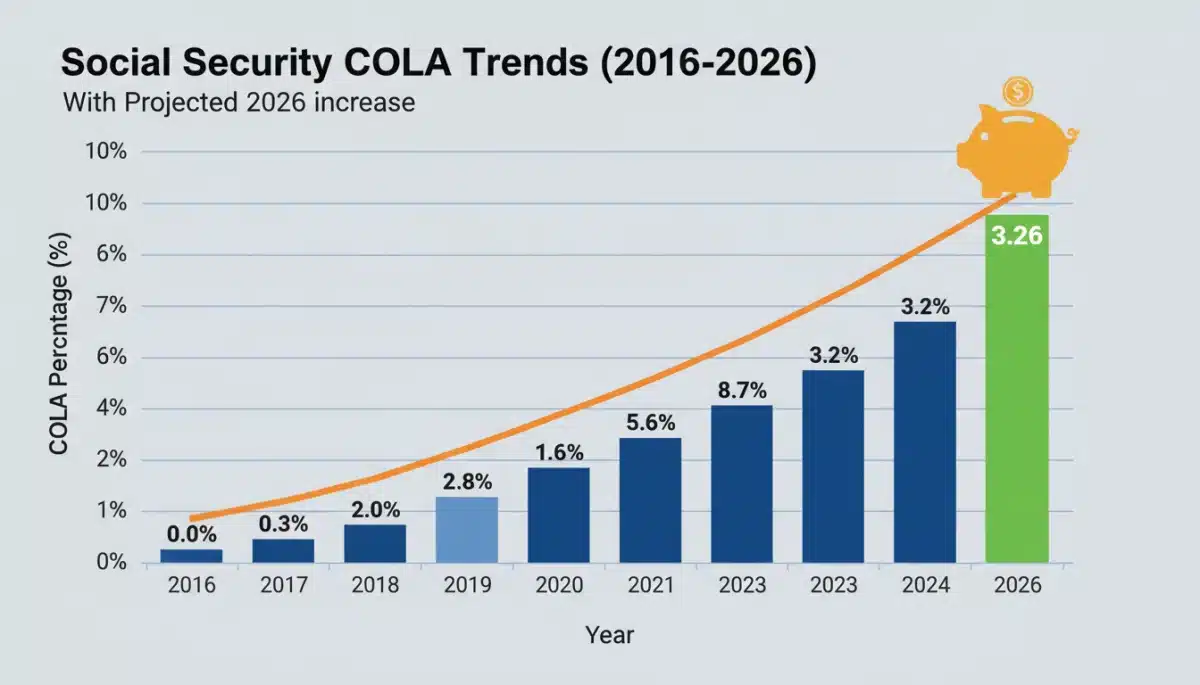
Examining historical COLA trends provides essential context for understanding the projected 3.2% increase for 2026. Over the past few decades, COLA percentages have varied widely, reflecting different economic periods characterized by high inflation, economic stability, or even deflation. For instance, there have been years with no COLA increase due to minimal or negative inflation, contrasted with periods of significant increases, such as during the high inflation of the 1970s and early 1980s, and more recently, the substantial adjustments seen in the post-pandemic era.
The economic context in which these adjustments are made is crucial. Factors such as global supply chain disruptions, energy price fluctuations, and shifts in consumer demand all contribute to inflationary pressures, which in turn influence the CPI-W and subsequently the COLA. The recent surges in inflation, partly driven by post-pandemic economic recovery and geopolitical events, have led to some of the largest COLA increases in recent memory, making the 2026 projection particularly relevant.
Key Factors Influencing COLA
- Global Economic Conditions: International events and economic policies can have a ripple effect on domestic inflation.
- Energy Prices: Fluctuations in oil and gas prices are significant drivers of overall inflation, directly impacting consumer costs.
- Consumer Demand: Strong consumer spending can push prices higher, contributing to inflationary pressures.
- Supply Chain Dynamics: Disruptions or improvements in supply chains affect the availability and cost of goods.
Understanding these historical patterns and underlying economic drivers helps beneficiaries and policymakers alike anticipate future adjustments. While a 3.2% COLA for 2026 suggests a continued elevated level of inflation compared to pre-pandemic norms, it also indicates a potential moderation from some of the higher peaks seen recently. This balance is key to ensuring that Social Security benefits remain a reliable source of income without contributing excessively to broader inflationary cycles.
In summary, the COLA is not an isolated figure but a reflection of complex economic forces at play. Its historical trajectory underscores the necessity of continuous adjustments to maintain the social contract of Social Security, adapting to the ever-changing economic realities faced by its recipients.
Who Benefits from the 2026 COLA?
The Social Security Cost-of-Living Adjustment for 2026 will directly impact a broad spectrum of beneficiaries across the United States. While often associated primarily with retirees, COLA adjustments extend to several other groups who rely on Social Security for their financial stability. Understanding who benefits helps illustrate the widespread importance of these annual increases.
Primarily, retired workers who receive Social Security benefits will see their monthly payments increase. This adjustment is crucial for them, as many live on fixed incomes and are particularly vulnerable to inflation. A 3.2% increase, as projected for 2026, will help these individuals cover rising costs for necessities like groceries, utilities, and healthcare, which constitute a significant portion of their budgets. Without such adjustments, their quality of life could diminish over time.
Diverse Beneficiary Groups
- Retired Workers: The largest group, receiving benefits based on their earnings history.
- Spouses and Dependents: Eligible spouses and children of retired, disabled, or deceased workers.
- Disabled Workers: Individuals receiving Social Security Disability Insurance (SSDI) benefits.
- Survivors: Widows, widowers, and minor children of deceased workers.
Beyond retirees, individuals receiving Social Security Disability Insurance (SSDI) benefits will also see their payments adjusted. These individuals, often unable to work due to severe medical conditions, depend heavily on SSDI to meet their daily needs. Similarly, survivors of deceased workers, including widows, widowers, and minor children, who receive survivor benefits, will also experience the increase. This ensures that these vulnerable populations can maintain their financial security despite inflationary pressures.
The universality of COLA across these different beneficiary groups highlights its role as a fundamental pillar of financial support. The projected 3.2% increase for 2026 is therefore not just a statistic but a tangible improvement in the financial outlook for millions of Americans, helping them navigate the complexities of modern economic life with greater confidence.
Potential Challenges and Considerations
While the projected 3.2% Social Security COLA for 2026 offers much-needed relief to beneficiaries, it also brings forth a set of challenges and considerations that warrant careful examination. The effectiveness of any COLA is not solely determined by its percentage but also by how it interacts with other economic factors and individual financial situations. One primary concern is the potential for inflation to continue outpacing the COLA, thereby eroding the real purchasing power of benefits.
Another significant consideration revolves around the impact of COLA on Medicare premiums. By law, increases in Medicare Part B premiums are often deducted directly from Social Security benefits. This means that a portion of the COLA increase could be absorbed by higher healthcare costs, potentially reducing the net benefit increase for some individuals. Beneficiaries need to be aware of this interplay to accurately assess their financial outlook.
Key Challenges
- Inflationary Lag: COLA is based on past inflation, meaning current high inflation could still outpace the adjustment.
- Medicare Premium Increases: Rising Medicare Part B premiums can offset a portion of the COLA benefit.
- Taxation of Benefits: Higher benefits could push some individuals into income brackets where a portion of their Social Security benefits becomes taxable.
- Cost of Living Disparities: The national average CPI-W may not accurately reflect the cost of living in specific high-cost regions.
Furthermore, for some beneficiaries, a larger COLA could inadvertently lead to a portion of their Social Security benefits becoming taxable. The thresholds for taxing Social Security benefits are not adjusted for inflation, meaning that higher benefit amounts could push more individuals over these limits, resulting in a higher tax liability. This unintended consequence can diminish the overall financial gain from a COLA increase.
Lastly, the CPI-W, while a broad measure, may not perfectly reflect the spending patterns and cost-of-living increases experienced by all beneficiaries, particularly those with higher healthcare expenses or living in areas with significantly higher local inflation. These nuances highlight the complexity of ensuring that COLA truly serves its intended purpose across diverse populations and economic realities.
Financial Planning and the 2026 COLA
For millions of Americans, the Social Security Cost-of-Living Adjustment (COLA) for 2026 is not just a statistical figure; it’s a critical component of their financial planning. Understanding how this projected 3.2% increase fits into a broader financial strategy is essential for ensuring long-term stability and peace of mind. Effective financial planning requires beneficiaries to look beyond the immediate increase and consider its implications for their overall budget, savings, and future expenses.
One of the first steps is to re-evaluate your monthly budget. With a projected 3.2% increase, beneficiaries can anticipate a slightly higher income. This provides an opportunity to adjust spending, potentially allocate more towards savings, or cover previously strained expenses. However, it’s also important to factor in potential increases in other costs, such as Medicare premiums, which can often rise in tandem with COLA, effectively reducing the net gain.
Strategies for Beneficiaries
- Budget Re-evaluation: Adjust your monthly budget to reflect the new benefit amount and anticipated expenses.
- Review Healthcare Costs: Factor in potential increases in Medicare Part B premiums and other medical expenses.
- Consider Tax Implications: Understand how a higher benefit might affect your tax liability, especially if you have other sources of income.
- Diversify Income Streams: Relying solely on Social Security can be risky; explore other savings or investment options.
Moreover, financial planning should extend to long-term goals. While Social Security provides a foundational income, it is generally not intended to be the sole source of retirement funds. The 2026 COLA, while helpful, should be viewed as one piece of a larger financial puzzle. Beneficiaries are encouraged to review their investment portfolios, consider part-time work if feasible, or explore other income-generating opportunities to supplement their Social Security benefits. This holistic approach helps build a more resilient financial future.
The projected 3.2% COLA for 2026 serves as a timely reminder for all beneficiaries to engage actively in their financial planning. By understanding the nuances of this adjustment and its broader economic context, individuals can make informed decisions that safeguard their financial well-being and ensure a more secure retirement.
The Official Announcement and Future Outlook
The official announcement of the Social Security Cost-of-Living Adjustment (COLA) for 2026 is a highly anticipated event, typically occurring in October. While projections, such as the 3.2% increase, offer valuable insights, the final figure is determined by the Social Security Administration (SSA) based on the actual Consumer Price Index for Urban Wage Earners and Clerical Workers (CPI-W) data for the third quarter of the current year. This official declaration solidifies the adjustment that millions of beneficiaries will receive starting in January of the following year.
The period leading up to the announcement is often filled with speculation and analysis from economists and financial experts. These forecasts, while not definitive, play a crucial role in preparing beneficiaries and financial advisors for the upcoming changes. Once the official COLA is announced, the SSA will typically release detailed information explaining the calculation and providing examples of how the increase will affect average benefits.
What to Expect After the Announcement
- Official Notification: Beneficiaries will receive formal letters or online notifications detailing their new benefit amount.
- SSA Resources: The Social Security Administration website will update with comprehensive information regarding the COLA.
- Financial Adjustments: Banks and financial institutions will process the new payment amounts, effective January.
Looking beyond the 2026 COLA, the future outlook for Social Security adjustments remains a topic of ongoing discussion. The long-term solvency of the Social Security trust funds, demographic shifts, and evolving economic conditions all play a role in shaping future COLA discussions. While the COLA mechanism is designed to be automatic, broader reforms to the Social Security system are periodically debated to ensure its sustainability for future generations.
Therefore, staying informed about economic trends and legislative discussions is just as important as understanding the annual COLA. The 2026 adjustment will provide immediate relief, but a proactive approach to understanding the broader landscape of Social Security ensures that beneficiaries are well-prepared for both immediate and long-term financial realities. The official announcement will be a key milestone, setting the stage for the financial year ahead for millions of Americans.
| Key Aspect | Brief Description |
|---|---|
| Projected 2026 COLA | A 3.2% increase is forecasted, aiming to offset inflation for beneficiaries. |
| COLA Calculation Basis | Determined by the Consumer Price Index for Urban Wage Earners and Clerical Workers (CPI-W). |
| Impact on Beneficiaries | Affects retirees, disabled workers, and survivors by increasing monthly payments. |
| Key Considerations | Potential offsets from Medicare premiums and taxation of benefits should be factored. |
Frequently Asked Questions About COLA 2026
The Social Security Cost-of-Living Adjustment (COLA) for 2026 is currently projected to be around 3.2%. This forecast is based on economic indicators and inflation trends, though the final figure will be officially announced later in the year by the SSA.
COLA is calculated based on the Consumer Price Index for Urban Wage Earners and Clerical Workers (CPI-W). The average CPI-W for the third quarter (July, August, September) is compared to the previous year’s third-quarter average to determine the percentage increase.
The official Social Security COLA for 2026 is typically announced by the Social Security Administration (SSA) in October. Beneficiaries will then receive detailed notifications about their new benefit amounts for the upcoming year.
While the COLA aims to protect purchasing power, its effectiveness can vary. The 3.2% projection is a national average, and individual expenses, particularly for healthcare or in high-cost regions, might increase at a different rate, potentially outpacing the adjustment.
By law, increases in Medicare Part B premiums can be deducted from Social Security benefits. This means a portion of your COLA increase could be used to cover higher Medicare costs, potentially reducing the net increase you receive in your monthly benefit.
Conclusion
The projected 3.2% Social Security Cost-of-Living Adjustment (COLA) for 2026 represents a critical lifeline for millions of Americans, signaling an ongoing effort to shield beneficiaries from the impacts of inflation. While this increase offers a measure of financial relief, it is imperative for individuals to engage in proactive financial planning, considering not only the direct benefit increase but also potential offsets from rising Medicare premiums and tax implications. Understanding the mechanisms behind COLA and its broader economic context empowers beneficiaries to make informed decisions, ensuring their financial stability in a dynamic economic environment.