CBO Forecast 2026: Deficit Projections and National Impact
Anúncios
The Congressional Budget Office (CBO) 2026 deficit projections indicate a widening fiscal gap, posing substantial challenges for the U.S. economy, influencing policy decisions, and impacting future generations.
Anúncios
Understanding the implications of the Congressional Budget Office (CBO) Forecast: 2026 Deficit Projections and Their National Impact is crucial for every American. These projections offer a critical glimpse into the nation’s financial health, shaping everything from economic stability to the daily lives of citizens. What do these numbers truly mean for our future?
Decoding the CBO: Role and Methodology
Anúncios
The Congressional Budget Office (CBO) serves as an independent, nonpartisan agency providing budget and economic information to Congress. Its core mission is to help lawmakers make informed decisions about the nation’s budget and economy. Established in 1974, the CBO is renowned for its objective analysis, free from political influence, making its reports a cornerstone for fiscal policy discussions.
The CBO’s methodology for forecasting involves a complex interplay of economic models, historical data, and current legislative frameworks. They analyze trends in government spending, revenue collection, and macroeconomic indicators such as GDP growth, inflation, and unemployment rates. This meticulous process ensures that their projections offer a comprehensive and reliable outlook on the nation’s fiscal trajectory.
Key Aspects of CBO Forecasting
The CBO’s forecasts are not mere predictions; they are carefully constructed analyses based on a set of assumptions about future economic conditions and existing laws. These assumptions are transparently laid out in their reports, allowing for public scrutiny and understanding of the underlying basis for their projections.
- Economic Baseline: A projection of future government spending and revenues under current laws.
- Policy Impact Analysis: Assessing how proposed legislation would affect the federal budget.
- Long-Term Projections: Extending forecasts beyond the typical 10-year window to analyze long-term fiscal sustainability.
Ultimately, the CBO’s role is to provide Congress with the best possible information to guide budget decisions. Their reports are instrumental in highlighting potential fiscal challenges and opportunities, fostering a more transparent and accountable government.
The 2026 Deficit Landscape: Key Figures and Trends
As we approach 2026, the Congressional Budget Office’s projections paint a detailed picture of the nation’s fiscal health. The CBO anticipates a continued upward trend in the federal budget deficit, driven by a combination of persistent spending growth and relatively stable, though sometimes volatile, revenue streams. These figures are not just abstract numbers; they represent the ongoing imbalance between what the government spends and what it collects.
Key figures for 2026 reveal a projected deficit in the trillions, a level that has become increasingly common in recent years. This sustained high deficit is a significant concern for economists and policymakers alike. The CBO’s analysis delves into the specific categories of spending that are expected to contribute most to this growing gap, offering insights into where the fiscal pressures are most acute.
Major Drivers of the 2026 Deficit
Several factors are converging to shape the 2026 deficit landscape. Understanding these drivers is essential for comprehending the complexity of the nation’s fiscal challenges and for formulating effective policy responses.
- Mandatory Spending: Programs like Social Security and Medicare, which operate outside the annual appropriations process, are projected to continue growing due to an aging population and rising healthcare costs.
- Net Interest Outlays: As the national debt grows and interest rates potentially rise, the cost of servicing the debt is expected to become an increasingly substantial portion of the federal budget.
- Discretionary Spending: While often subject to annual negotiations, defense and non-defense discretionary spending also contribute to the overall deficit, influenced by ongoing national priorities and global events.
The CBO’s 2026 deficit projections highlight a trajectory that, if unchecked, could lead to significant long-term economic consequences. These trends underscore the urgent need for comprehensive fiscal strategies.
National Impact: Economic Repercussions and Growth
The projected deficits for 2026, as outlined by the CBO, carry significant economic repercussions that extend far beyond mere budgetary accounting. A sustained high deficit can exert downward pressure on economic growth, influence inflation, and impact the nation’s overall financial stability. These effects are not always immediately apparent but can accumulate over time, leading to tangible consequences for businesses and households.
One of the primary concerns is the potential for increased government borrowing to crowd out private investment. When the government borrows heavily, it competes with private companies for available capital, potentially driving up interest rates. Higher interest rates can make it more expensive for businesses to borrow and expand, thereby slowing job creation and economic growth. For individuals, this could translate to higher costs for mortgages and other loans.
Impact on Key Economic Indicators
The CBO’s forecast suggests several ways the deficit could ripple through the economy, affecting a range of indicators that touch everyday life.
- Interest Rates: Persistent deficits could lead to higher real interest rates, increasing borrowing costs for both the government and the private sector.
- Inflation: While not a direct consequence, large deficits, especially if financed by monetary expansion, could contribute to inflationary pressures.
- Economic Growth: Reduced private investment due to crowding out can dampen long-term economic growth, leading to lower wages and fewer opportunities.
Ultimately, the economic repercussions of the 2026 deficit projections underscore the interconnectedness of fiscal policy and economic performance. Addressing these challenges is vital for fostering a robust and sustainable economic future for the United States.
The Debt Burden: Implications for Future Generations
The rising federal budget deficit directly translates into an increasing national debt, a burden that carries profound implications for future generations. When the government spends more than it collects, it must borrow to cover the difference, adding to the cumulative debt. The CBO’s 2026 projections indicate that this trajectory of debt accumulation is set to continue, raising critical questions about intergenerational equity and the long-term fiscal health of the nation.
A growing national debt means that a larger portion of future tax revenues will be allocated to servicing this debt, rather than investing in public services, infrastructure, or education. This reallocation of resources can limit the ability of future policymakers to respond to economic downturns, invest in critical areas, or address unforeseen national challenges. It effectively reduces the fiscal flexibility available to future generations.
Long-Term Consequences of Debt Accumulation
The CBO’s long-term outlook consistently highlights the unsustainable nature of current fiscal policies. Without significant changes, the debt-to-GDP ratio is projected to reach unprecedented levels, presenting a daunting challenge for the nation.
- Reduced Fiscal Space: Less room for future governments to implement new programs or respond to crises without further increasing borrowing.
- Intergenerational Equity: Younger generations may face higher taxes or reduced benefits to pay for the accumulated debt of previous generations.
- Risk of Fiscal Crisis: Although unlikely in the short term, a continuously rising debt could eventually undermine investor confidence, leading to higher interest rates and potential economic instability.
The debt burden, as illuminated by the CBO’s 2026 projections, serves as a stark reminder of the need for sustainable fiscal policies that consider the economic well-being of both current and future Americans.
Policy Responses: Navigating the Fiscal Challenge
Addressing the fiscal challenges presented by the CBO’s 2026 deficit projections requires a multifaceted and thoughtful approach to policy. There is no single, simple solution, but rather a combination of strategies aimed at both increasing government revenues and controlling spending. These policy responses often involve difficult choices, necessitating bipartisan cooperation and a long-term vision for the nation’s financial health.
On the revenue side, discussions often revolve around tax reform. This could include adjusting tax rates for individuals and corporations, closing loopholes, or introducing new forms of taxation. The goal is to generate sufficient revenue to fund government operations without stifling economic activity or disproportionately burdening certain segments of the population. Any tax changes would need careful consideration of their economic and social impacts.
Key Areas for Policy Intervention
To effectively navigate the fiscal challenges, policymakers typically focus on several key areas, each with its own set of complexities and potential impacts.
- Spending Reductions: Identifying areas within the federal budget where spending can be reduced without compromising essential services or national priorities. This often involves scrutinizing discretionary spending and evaluating mandatory programs.
- Tax Reforms: Reforming the tax code to enhance revenue generation, promote economic efficiency, and ensure fairness. This could involve adjustments to income taxes, corporate taxes, or other revenue sources.
- Entitlement Program Adjustments: Given the significant and growing share of the budget consumed by programs like Social Security and Medicare, discussions often include potential reforms to ensure their long-term solvency, such as adjusting eligibility ages or benefit formulas.
Crafting effective policy responses to the projected deficits requires a delicate balance between economic growth, social equity, and fiscal responsibility. The CBO’s data provides the necessary foundation for these critical policy deliberations.
Future Outlook: Beyond 2026 and Long-Term Sustainability
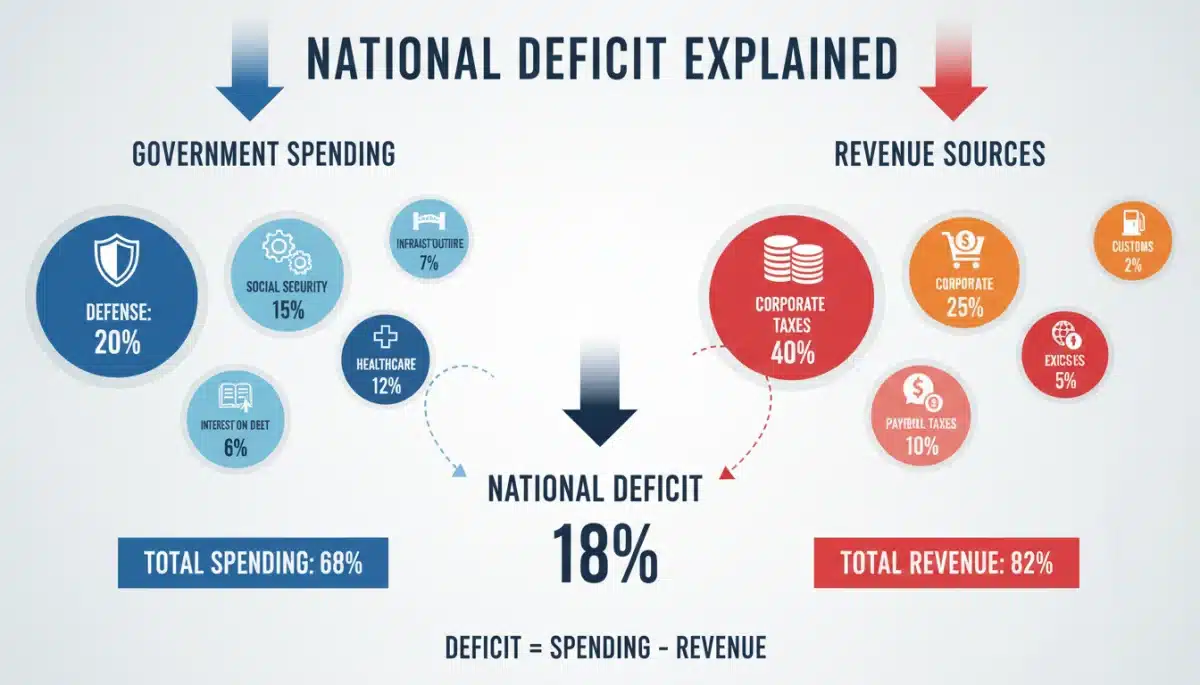
Looking beyond the immediate 2026 projections, the CBO also provides crucial long-term forecasts that illuminate the path toward or away from fiscal sustainability. These extended analyses consider demographic shifts, technological advancements, and evolving economic structures, offering a broader perspective on the nation’s financial future. The trajectory of the national debt and deficit in the coming decades will largely depend on the policy decisions made today.
The long-term outlook often highlights the unsustainability of current fiscal trends, particularly concerning mandatory spending programs and the rising cost of interest on the national debt. Without significant policy changes, the debt-to-GDP ratio is projected to continue its upward climb, potentially reaching levels that could impede economic stability and reduce living standards for future generations. This emphasizes the urgency of addressing fiscal imbalances proactively rather than reactively.
Challenges and Opportunities for Long-Term Sustainability
Achieving long-term fiscal sustainability involves overcoming significant challenges while also recognizing potential opportunities for reform and economic growth. The CBO’s reports provide a framework for understanding these dynamics.
- Demographic Pressures: An aging population will continue to increase spending on Social Security and healthcare, posing a major fiscal challenge.
- Healthcare Costs: Rising healthcare expenditures are a primary driver of long-term spending growth, requiring innovative solutions for cost containment.
- Technological Advancements: While potentially increasing productivity and tax revenues, technological shifts can also impact employment and require adjustments to social safety nets.
The future outlook, guided by the CBO’s comprehensive forecasts, underscores that sustained economic health and fiscal stability are not guaranteed. They require continuous vigilance, informed policy choices, and a commitment to responsible governance that considers the well-being of generations to come.
| Key Aspect | Brief Description |
|---|---|
| CBO Role | Independent, nonpartisan agency providing budget and economic information to Congress for informed decision-making. |
| 2026 Deficit Trend | Projected continued upward trend in federal budget deficit, driven by spending growth and stable revenues. |
| National Debt Impact | Growing debt burden limits future fiscal flexibility and may lead to higher interest rates, affecting future generations. |
| Policy Challenges | Requires balancing spending reductions, tax reforms, and entitlement program adjustments for long-term sustainability. |
Frequently Asked Questions About CBO 2026 Deficit Projections
The CBO is a nonpartisan agency that provides Congress with objective budget and economic analyses. Its main goal is to help lawmakers make informed fiscal decisions by offering unbiased reports on the economy and the budgetary implications of proposed legislation.
High deficits can lead to increased government borrowing, potentially crowding out private investment and driving up interest rates. This can slow economic growth, reduce job creation, and make borrowing more expensive for businesses and individuals, affecting overall financial stability.
The primary drivers include increased mandatory spending on programs like Social Security and Medicare due to an aging population, rising net interest outlays on the national debt, and various discretionary spending priorities set by Congress.
A growing national debt limits future fiscal flexibility, potentially reducing funds available for public investments. It can also burden future generations with higher taxes or reduced benefits and carries risks for long-term economic stability and investor confidence.
Policy responses often involve a combination of spending reductions, such as cuts to discretionary programs or reforms to mandatory spending, and revenue enhancements through tax reforms. These strategies aim to balance fiscal responsibility with economic growth and social needs.
Conclusion
The Congressional Budget Office’s 2026 deficit projections serve as a crucial warning, highlighting the persistent fiscal challenges facing the United States. These forecasts underscore the urgent need for thoughtful policy decisions to address the widening gap between government spending and revenue. Understanding the CBO’s detailed analysis of economic trends, the drivers of the deficit, and the profound national impact on economic growth and future generations is paramount. Moving forward, a concerted effort from policymakers, guided by this objective data, will be essential to ensure long-term fiscal sustainability and a robust economic future for all Americans.