Online Education Trends 2026: Adult Learner’s Guide

Anúncios
The evolving landscape of online education by 2026 will profoundly impact adult learners, necessitating an understanding of new technologies, personalized learning paths, and skills-based certifications for career growth.
Anúncios
The world of learning is constantly evolving, and for adult learners, staying informed about the latest trends in online education for 2026 is not just beneficial, it’s essential. As technology advances and the global workforce shifts, online learning platforms are adapting, offering unprecedented opportunities for skill development, career change, and personal growth. This article delves into the critical trends shaping the future of digital education, providing a roadmap for adult learners to navigate and thrive in this dynamic environment.
The Rise of Personalized Learning Paths
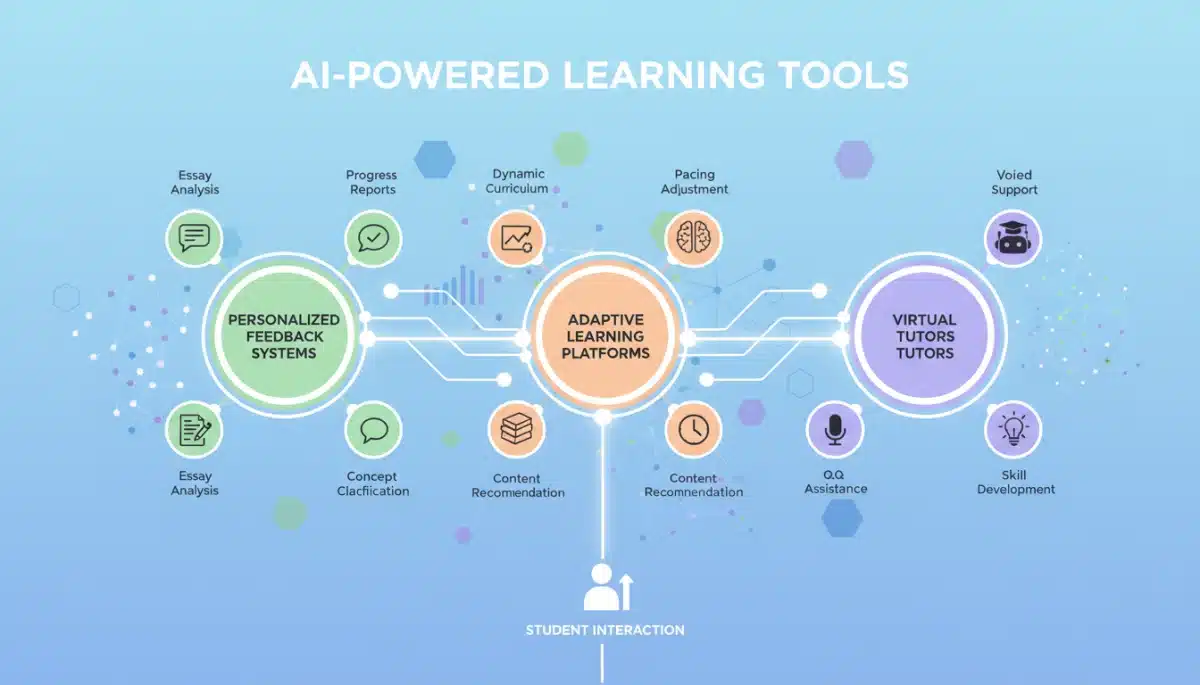
Personalized learning is rapidly moving from a desirable feature to a fundamental expectation in online education. By 2026, adult learners will benefit from highly tailored educational experiences that adapt to their individual pace, learning style, and career goals. This shift is driven by advancements in artificial intelligence (AI) and machine learning, which can analyze performance data and recommend specific content or learning activities.
Anúncios
These adaptive systems offer a significant advantage over traditional one-size-to-all approaches. They can identify knowledge gaps and strengths, ensuring that learners spend their time efficiently on areas that require the most attention. This not only enhances comprehension but also boosts motivation, as the learning journey feels more relevant and achievable.
AI-Driven Adaptability
AI algorithms are becoming increasingly sophisticated, capable of creating dynamic learning paths. This means courses are no longer static but evolve with the learner.
- Custom Content Delivery: AI can curate resources, articles, and videos based on a learner’s prior knowledge and current progress.
- Adaptive Assessment: Quizzes and tests adjust difficulty levels in real-time, providing challenges that are neither too easy nor too frustrating.
- Intelligent Feedback: Learners receive instant, constructive feedback that helps them understand mistakes and improve, much like a personal tutor.
The impact of personalized learning paths extends beyond mere convenience. It democratizes access to high-quality education by making it more accessible and effective for individuals with diverse backgrounds and learning needs. For adult learners balancing work and family, this flexibility is invaluable, allowing them to integrate education seamlessly into their busy lives.
Micro-credentials and Skills-Based Certifications
In a rapidly changing job market, traditional degrees are increasingly being complemented by, or even replaced with, micro-credentials and skills-based certifications. This trend is particularly relevant for adult learners who need to quickly acquire specific, in-demand skills without committing to a multi-year degree program. By 2026, these focused qualifications will be a cornerstone of online education.
Micro-credentials validate proficiency in a particular skill or competency, often taking weeks or months to complete rather than years. They are typically offered by universities, industry leaders, and specialized online platforms, making them highly credible and directly applicable to workforce needs. This agile approach to learning allows adults to upskill or reskill efficiently, remaining competitive in their current roles or pivoting to new careers.
The Value Proposition
The appeal of micro-credentials lies in their practicality and immediate relevance. Employers are increasingly recognizing the value of these targeted certifications as proof of specific abilities.
- Direct Career Impact: Skills acquired are often directly transferable to job functions.
- Time and Cost Efficiency: Significantly less time and financial investment compared to traditional degrees.
- Stackable Credentials: Many micro-credentials are ‘stackable,’ meaning they can be combined to form larger qualifications or even degrees over time.
This shift reflects a broader employer focus on demonstrated skills rather than solely on academic pedigree. For adult learners, it means a more direct and efficient route to enhancing their employability and earning potential. Platforms offering these certifications are seeing massive growth, indicating their increasing importance in the educational landscape.
The Expansion of Immersive Learning Experiences
Immersive technologies such as Virtual Reality (VR), Augmented Reality (AR), and Mixed Reality (MR) are poised to revolutionize online education by 2026. These technologies move beyond traditional video lectures and static content, offering engaging, interactive, and highly experiential learning environments. For adult learners, this means more effective skill acquisition, particularly in fields requiring practical application.
Imagine dissecting a virtual human body in an anatomy class, practicing complex machinery repairs in a simulated industrial environment, or conducting scientific experiments without the need for a physical lab. These are just a few examples of how immersive learning can transform the educational experience, making abstract concepts tangible and providing safe spaces for practice and experimentation.
Key Immersive Technologies
The integration of VR/AR/MR into online curricula is enhancing engagement and retention:
- Virtual Reality (VR): Creates fully simulated environments, ideal for training in high-risk professions or exploring historical sites.
- Augmented Reality (AR): Overlays digital information onto the real world, useful for on-the-job training or interactive field trips.
- Mixed Reality (MR): Blends real and virtual worlds, allowing for real-time interaction with digital objects in a physical space.
These technologies are particularly beneficial for adult learners who learn best by doing. They provide a deeper level of engagement and allow for repeated practice in a consequence-free environment, which is crucial for mastering complex skills. As hardware becomes more affordable and content creation tools more accessible, immersive learning will become a standard feature in many online programs.

Hybrid Learning Models: The Best of Both Worlds
While online education offers unparalleled flexibility, many adult learners still value the benefits of in-person interaction and hands-on experience. By 2026, hybrid learning models, which strategically combine online and face-to-face components, will become even more prevalent. This approach aims to leverage the strengths of both modalities, offering a balanced and effective learning experience. This flexibility is especially attractive to adult learners who may have geographical constraints or prefer a blended approach to learning.
Hybrid models can take various forms, from programs where most content is delivered online with occasional in-person workshops, to those that integrate virtual labs and simulations with traditional classroom sessions. The key is intentional design, ensuring that each component serves a specific pedagogical purpose and enhances the overall learning journey.
Designing Effective Hybrid Programs
Successful hybrid models require careful planning to optimize engagement and learning outcomes:
The synchronous and asynchronous elements must complement each other, with online resources preparing learners for deeper discussions or practical application during in-person sessions. Technology plays a crucial role in managing these blended environments, with learning management systems (LMS) facilitating seamless transitions between online and offline activities.
For adult learners, hybrid models offer the structure and community of traditional education with the flexibility of online learning. This balance can lead to higher completion rates and a more enriching educational experience, addressing the diverse needs of a mature student population.
Emphasis on Soft Skills and Emotional Intelligence
Beyond technical proficiency, the modern workforce increasingly demands strong soft skills and emotional intelligence. By 2026, online education will place a greater emphasis on developing these crucial interpersonal abilities. While often perceived as difficult to teach remotely, innovative online platforms are finding ways to foster communication, collaboration, critical thinking, and empathy.
Online courses are incorporating more project-based learning, group assignments, and virtual collaboration tools to simulate real-world team environments. Peer feedback mechanisms, virtual role-playing, and guided reflection exercises are also being used to cultivate emotional intelligence and self-awareness. For adult learners, honing these skills is paramount for leadership roles, effective teamwork, and navigating complex professional relationships.
Innovative Approaches to Soft Skill Development
Online platforms are adapting their methodologies to address this critical need:
- Collaborative Projects: Virtual teams work together on real-world problems, fostering communication and problem-solving.
- Interactive Simulations: Learners practice difficult conversations or leadership scenarios in a safe, simulated environment.
- Personalized Coaching: AI-powered tools or human mentors provide feedback on communication styles and interpersonal interactions.
The development of soft skills online is not just about completing tasks, but about understanding group dynamics, managing conflict, and expressing ideas clearly and empathetically. These skills are often what differentiate successful professionals, and online education is stepping up to the challenge of delivering them effectively.
Lifelong Learning Ecosystems and Continuous Upskilling
The concept of lifelong learning is not new, but by 2026, it will evolve into comprehensive ecosystems that support continuous upskilling and reskilling throughout an individual’s career. Online education platforms will become central hubs within these ecosystems, offering dynamic pathways for adults to adapt to technological shifts and industry demands. This proactive approach to learning is vital for maintaining career relevance and fostering personal growth.
These ecosystems will integrate various learning modalities, from short courses and bootcamps to advanced certifications and mentorship programs. They will also leverage data analytics to provide personalized recommendations for career advancement and skill development, acting as a personal learning concierge. For adult learners, this means having access to a continuous stream of relevant educational opportunities, ensuring they never fall behind.
Components of a Lifelong Learning Ecosystem
These ecosystems are designed to provide ongoing support and opportunities:
- Integrated Platforms: A single portal accessing diverse learning resources, career counseling, and networking opportunities.
- Skill Gap Analysis: Tools that identify current skills versus desired skills for career progression.
- Community and Mentorship: Opportunities to connect with peers and industry experts for ongoing support and guidance.
The focus is on creating a seamless and supportive environment where learning is an ongoing journey, not a one-time event. This ensures that adult learners can continuously evolve their skill sets, making them indispensable in an ever-changing professional landscape.
| Key Trend | Brief Description |
|---|---|
| Personalized Learning | AI-driven paths adapting to individual learner pace, style, and goals for enhanced effectiveness. |
| Micro-credentials | Short, focused certifications for in-demand skills, offering quick career enhancement. |
| Immersive Learning | VR/AR/MR technologies creating engaging, experiential learning environments for practical skills. |
| Lifelong Ecosystems | Integrated platforms for continuous upskilling, career guidance, and community support. |
Frequently Asked Questions About Online Education Trends for 2026
By 2026, AI will personalize your learning by adapting content, assessment difficulty, and feedback to your individual needs. It will identify your strengths and weaknesses, guiding you through the most effective learning path, making your study time more efficient and targeted to your specific goals and pace.
While traditional degrees remain valuable, micro-credentials are gaining significant recognition. Employers increasingly prioritize demonstrated skills, and these certifications provide verifiable proof of specific competencies. They are becoming crucial for rapid upskilling and reskilling, often complementing or even substituting traditional degrees for specific job roles.
You can expect to encounter Virtual Reality (VR) for simulated environments, Augmented Reality (AR) for overlaying digital information onto real settings, and Mixed Reality (MR) for blending real and virtual interactions. These technologies will create engaging, hands-on experiences, especially beneficial for practical skill development and complex problem-solving.
To prepare, adult learners should embrace continuous learning, explore platforms offering micro-credentials, and be open to new technologies like VR/AR. Focus on developing both technical and soft skills, and actively seek out personalized learning opportunities that align with your career aspirations and learning style for optimal success.
By 2026, hybrid learning models, blending online and in-person components, will be increasingly prominent. While virtual learning offers immense flexibility, the value of face-to-face interaction and hands-on experiences will ensure that blended approaches remain crucial, providing a balanced and comprehensive educational experience for many learners.
Conclusion
The landscape of online education is undergoing a profound transformation, and by 2026, adult learners will find themselves in an environment rich with personalized, flexible, and immersive learning opportunities. From AI-driven adaptive platforms and highly targeted micro-credentials to engaging VR/AR experiences and comprehensive lifelong learning ecosystems, the future of digital education is designed to empower individuals to continuously evolve their skills and careers. Staying informed and proactively engaging with these emerging trends will be key to unlocking new possibilities and achieving professional growth in a dynamic world.