Student Loan Repayment Strategies 2026: Save Thousands

Anúncios
Implementing effective student loan repayment strategies in 2026 is crucial for borrowers to minimize interest accrual and accelerate debt freedom through informed choices and proactive financial planning.
Anúncios
Navigating the complex world of student loans can feel overwhelming, but with the right approach, you can save a substantial amount on interest. Understanding and applying effective student loan repayment strategies for 2026 is key to transforming your financial future.
Anúncios
Understanding your student loans: the foundation of smart repayment
Before diving into specific repayment tactics, it’s essential to have a clear picture of your current student loan landscape. Many borrowers overlook this critical first step, which can lead to missed opportunities for savings. Knowing the details of your loans empowers you to make informed decisions.
Federal vs. private loans: what’s the difference?
The type of loan you have dictates many of your repayment options. Federal student loans, issued by the U.S. government, come with various borrower protections and flexible repayment plans. Private student loans, offered by banks and other financial institutions, typically have fewer protections but can sometimes offer competitive interest rates based on creditworthiness.
- Federal loans: Often include income-driven repayment plans, forbearance, deferment, and potential for loan forgiveness.
- Private loans: Terms and conditions vary widely by lender; usually less flexible but might offer lower rates if you have excellent credit.
- Interest rates: Federal loan rates are fixed annually; private loan rates can be fixed or variable.
Gather all your loan documents, including statements from your servicers, to identify each loan’s principal balance, interest rate, and current repayment status. This comprehensive overview will be your roadmap to selecting the most effective strategy.
Optimizing federal student loan repayment plans
Federal student loans offer a suite of repayment plans designed to fit various financial situations. Choosing the right one can significantly impact your monthly payments and the total amount of interest you pay over time. It’s not a one-size-fits-all solution, and what works for one person might not be ideal for another.
Income-driven repayment (IDR) plans: a safety net for many
IDR plans adjust your monthly payment based on your income and family size. This can be a lifesaver if your income is low or unpredictable. While IDR plans can extend your repayment period and potentially increase the total interest paid, they prevent default and can lead to loan forgiveness after 20 or 25 years of qualifying payments.
- REPAYE (Revised Pay As You Earn): Payments are generally 10% of your discretionary income.
- PAYE (Pay As You Earn): Similar to REPAYE, but with caps on monthly payments.
- IBR (Income-Based Repayment): Payments are 10% or 15% of discretionary income, depending on when you borrowed.
- ICR (Income-Contingent Repayment): Payments are either 20% of discretionary income or what you’d pay on a 12-year fixed plan, whichever is less.
It’s crucial to recertify your income and family size annually for IDR plans. Failing to do so can result in your payments reverting to the standard plan amount and any unpaid interest capitalizing, adding to your principal balance. Regularly reviewing your income and family status ensures you’re always on the most beneficial IDR plan.
The power of refinancing: when and why it makes sense
Refinancing student loans involves taking out a new loan, usually from a private lender, to pay off your existing student loans. The goal is typically to secure a lower interest rate, reduce your monthly payment, or change your loan terms. This strategy can be incredibly effective for saving thousands on interest, especially for borrowers with good credit and stable income.
Evaluating refinancing opportunities for 2026
Interest rates fluctuate, so keeping an eye on the market is important. In 2026, competitive rates may be available, making it an opportune time to consider refinancing. Lenders look for strong credit scores, a low debt-to-income ratio, and consistent employment. If your financial situation has improved since you first took out your loans, you might qualify for significantly better terms.
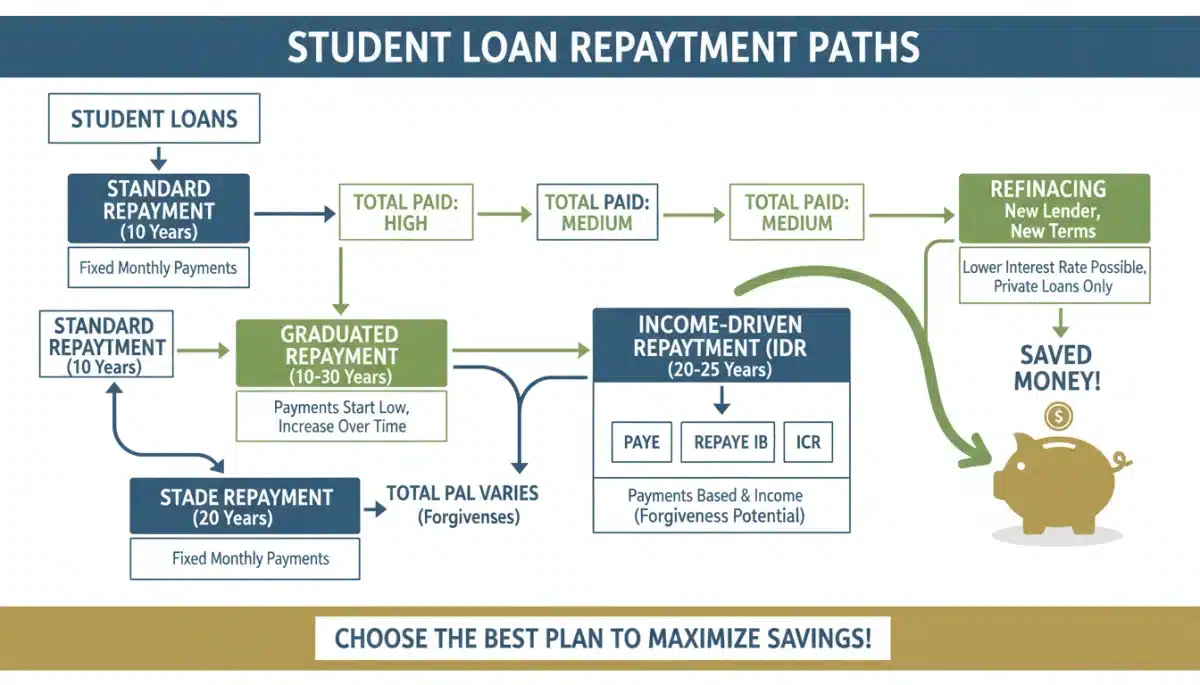
While refinancing can offer substantial savings, it’s not without its drawbacks, particularly for federal loan holders. Refinancing federal loans into a private loan means forfeiting federal benefits like IDR plans, forbearance, deferment, and access to loan forgiveness programs. Therefore, careful consideration of your financial stability and future career plans is essential before making this move.
Accelerating repayment: strategies to pay off loans faster
For those aiming to eliminate student loan debt as quickly as possible, several aggressive repayment strategies can significantly reduce the total interest paid. These methods often require a disciplined approach to budgeting and a commitment to allocating extra funds towards your loans.
The snowball and avalanche methods
Two popular strategies for accelerating debt repayment are the debt snowball and debt avalanche methods. Both aim to make extra payments, but they differ in their approach.
- Debt snowball: You pay off your smallest loan first while making minimum payments on others. Once the smallest is paid, you roll that payment into the next smallest loan. This method provides psychological wins.
- Debt avalanche: You tackle the loan with the highest interest rate first, making minimum payments on all others. Once the highest-interest loan is paid, you move to the next highest. This method saves the most money on interest.
Regardless of the method you choose, consistency is key. Even small extra payments can add up over time, especially if applied directly to the principal. Consider making bi-weekly payments, which results in an extra payment each year, or rounding up your monthly payment to the nearest hundred.
Smart budgeting and financial habits for loan repayment
Effective student loan repayment isn’t just about choosing the right plan; it’s also about cultivating sound financial habits. A well-structured budget, coupled with smart spending choices, creates the financial capacity to tackle your debt head-on. Without a clear understanding of your income and expenses, even the best repayment strategy can falter.
Creating a realistic budget
Start by tracking all your income and expenses for at least a month. Categorize your spending to identify areas where you can cut back. Common areas for savings include dining out, entertainment, and subscriptions. The goal isn’t deprivation, but rather mindful spending that aligns with your financial goals.
Once you have a clear budget, allocate a specific amount each month towards your student loans beyond the minimum payment, if possible. Treat this extra payment as a non-negotiable expense. Automating your loan payments, including any extra amounts, can ensure you stay on track and avoid missed payments, which can negatively impact your credit score and incur fees.
Navigating potential challenges and seeking professional help
Even with the best strategies, life can throw curveballs. Job loss, unexpected medical expenses, or other financial emergencies can derail your repayment efforts. It’s crucial to know your options and when to seek help to prevent defaulting on your loans.
Forbearance and deferment: temporary relief options
If you face temporary financial hardship, federal student loan programs offer forbearance and deferment. These options allow you to temporarily stop or reduce your loan payments. Interest may still accrue during these periods, especially with forbearance, so they should be used as a last resort and for the shortest duration necessary.
For private loans, contact your lender directly to inquire about hardship options. They may offer temporary payment reductions or other solutions, though these are typically less standardized than federal options. If you’re consistently struggling, consider credit counseling or consulting with a financial advisor specializing in student loan debt. They can provide personalized advice and help you navigate complex situations, ensuring you make the best decisions for your financial well-being in the long term.
| Key Strategy | Brief Description |
|---|---|
| Income-Driven Plans | Adjust payments based on income and family size for federal loans, offering flexibility. |
| Refinancing | Obtain a new private loan to pay off existing ones, aiming for lower interest rates. |
| Accelerated Payments | Utilize methods like debt avalanche/snowball to pay more than the minimum, reducing total interest. |
| Budgeting & Habits | Create a realistic budget and automate payments to consistently manage and reduce debt. |
Frequently asked questions about student loan repayment
The best strategy depends on your financial situation. If your income is low, income-driven repayment plans might be best. If you have stable income and good credit, refinancing for a lower interest rate could save you thousands. Assess your goals and current financial health to decide.
Yes, for federal student loans, you can change your repayment plan at any time, usually without penalty. This flexibility allows you to adapt as your income or financial circumstances change. Contact your loan servicer to explore available options and make adjustments.
Refinancing is beneficial if it secures a lower interest rate or better terms. However, refinancing federal loans into a private loan means losing federal protections like income-driven repayment and forgiveness programs. It’s best for those with stable finances and no need for federal benefits.
You can save thousands by securing lower interest rates through refinancing, making extra payments to reduce the principal faster, or choosing an accelerated payment plan. Even small, consistent extra payments can significantly reduce the total interest paid over the life of the loan.
If you have federal loans, explore income-driven repayment plans, forbearance, or deferment. For private loans, contact your lender immediately to discuss hardship options. Avoiding communication can lead to default, which has severe consequences for your credit and finances.
Conclusion
Mastering your student loan debt in 2026 is an achievable goal with the right knowledge and proactive strategies. By understanding your loan types, optimizing federal repayment plans, considering refinancing opportunities, and adopting disciplined budgeting habits, you can significantly reduce the total interest paid and accelerate your journey to financial freedom. Remember to regularly review your financial situation and adjust your strategy as needed, ensuring you’re always on the most advantageous path.